Learn how Dr. Jeffrey Cohen in Covina, CA uses advanced MODJAW 4D technology to evaluate jaw movement and help patients find answers to persistent jaw discomfort.
Have you ever woken up with a sore jaw, a pounding headache, or the feeling that you've been clenching your teeth all night?
Maybe your jaw clicks every time you chew. Perhaps you have an aching sensation near your ears that comes and goes. Or you've noticed that opening your mouth wide enough to enjoy your favorite foods isn't quite as easy as it used to be.
At first, these symptoms might seem unrelated. You may blame your headaches on stress, assume your ear discomfort is an infection, or dismiss that clicking sound as something you just have to live with.
But sometimes, these frustrating symptoms have something in common: a problem involving your temporomandibular joints, commonly known as your TMJs.
For people struggling with persistent jaw pain, understanding what's happening is the first step toward finding relief.
At his dental practice in Covina, CA, Dr. Jeffrey Cohen uses advanced technology, including MODJAW 4D jaw tracking, to take a closer look at how your jaw actually moves and functions. This information, combined with a thorough clinical evaluation, can help identify concerns and guide more personalized treatment recommendations.
Your temporomandibular joints are located just in front of your ears, connecting your lower jaw to your skull. These small but incredibly important joints help you perform everyday activities you probably never think twice about.
Talking. Chewing. Yawning. Laughing. Even swallowing.
When everything works comfortably, you barely notice your jaw joints. But when the joints or surrounding muscles become painful or aren't functioning properly, those everyday movements can suddenly become difficult.
The term TMJ refers to the joint itself. When people talk about having "TMJ," they're usually referring to temporomandibular disorders, also called TMD.
TMD isn't just one condition. It describes a group of disorders involving the jaw joints, chewing muscles, and related structures.
Some people experience occasional discomfort that resolves on its own. Others develop ongoing symptoms that interfere with eating, sleeping, working, and enjoying their daily lives.
And that's when jaw pain becomes much more than a minor annoyance.
One of the challenges with TMJ disorders is that symptoms aren't always limited to the jaw. They can show up in ways you might not immediately associate with a dental problem.
Here are seven symptoms worth paying attention to:
Not everyone with these symptoms has a TMJ disorder. Other dental and medical conditions can produce similar problems.
However, if several of these symptoms sound familiar, especially if they keep returning, a professional TMJ evaluation can help determine what's going on.
There's no single explanation for every case of TMJ pain.
In some patients, discomfort may be associated with jaw injuries, arthritis, inflammation, or problems involving the muscles that control jaw movement.
Clenching and grinding can also contribute to muscle soreness and strain, particularly when those habits occur repeatedly throughout the day or during sleep.
Stress may play a role as well. Think about the last time you were dealing with a particularly demanding day. Did you catch yourself pressing your teeth together or tightening your jaw?
Many people do this without even realizing it.
Over time, these habits can place additional strain on already sensitive jaw muscles.
However, it's important not to assume that every TMJ problem comes from grinding your teeth or having a misaligned bite. Research shows that temporomandibular disorders are complex, and the exact cause isn't always clear.
That's why identifying the nature of your symptoms is so important. Treating every patient the same way simply doesn't make sense when the underlying problems may be very different.
Imagine trying to figure out why your car makes a strange noise when turning, but the mechanic only examines it while it's parked.
They might learn quite a bit about the vehicle, but they could miss something important because the problem happens during movement.
Your jaw can present a similar challenge.
Traditional dental examinations, X-rays, and digital scans provide valuable information about your teeth, jaw structures, and oral health.
But a static image doesn't show the complete picture of how your lower jaw moves when you open, close, or shift it from side to side.
For patients experiencing jaw discomfort, observing those movements can add another piece to the puzzle.
That's where advanced jaw-tracking technology becomes especially interesting.
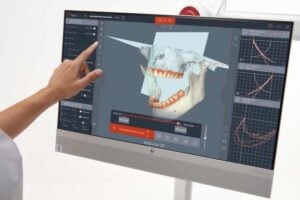
At his Covina dental office, Dr. Jeffrey Cohen has invested in MODJAW technology, an advanced digital system that allows dentists to capture and visualize a patient's actual jaw movements.
Rather than relying exclusively on static images or simulated jaw movements, MODJAW records how the jaw moves in real time.
This approach is known as 4D dentistry.
Most people are familiar with 3D imaging, which provides a three-dimensional view of structures. MODJAW adds another important element: movement over time.
In other words, it helps Dr. Cohen see not just what your jaw looks like, but how it functions.
MODJAW uses specialized optical tracking technology to record movements of the lower jaw.
As the patient performs guided jaw movements, the system captures movement information and displays it digitally.
When combined with compatible digital dental models, this information can help Dr. Cohen evaluate aspects of jaw function, including:
The result is a more detailed understanding of the patient's individual jaw movements.
For someone who has spent months dealing with unexplained jaw discomfort, being able to see how their jaw functions can also make the conversation about their symptoms much easier to understand.
One of the biggest frustrations for people dealing with recurring jaw pain is not knowing why it keeps happening.
Maybe you've tried avoiding certain foods. Perhaps you've taken pain relievers, used warm compresses, or purchased an over-the-counter nightguard.
You may have experienced temporary improvement, only to have the discomfort return.
MODJAW gives Dr. Cohen an additional way to study your jaw's movement patterns rather than relying on symptoms alone.
That information can be considered alongside your medical history, physical examination, and other diagnostic findings.
Importantly, MODJAW does not automatically identify the cause of every TMJ problem, and it isn't a replacement for other diagnostic methods when they're needed.
But it can provide useful functional information that helps support a more individualized evaluation.
And when you're dealing with persistent pain, having a clearer understanding of what's happening is a meaningful place to start.
The good news is that many TMJ problems can improve with conservative, nonsurgical approaches.
The right treatment depends on your symptoms, medical history, examination findings, and the type of disorder involved.
After evaluating your jaw, Dr. Cohen can discuss appropriate options, which may include self-care recommendations, changes in habits, or additional treatment when indicated.
Common approaches to managing TMJ discomfort include:
Reducing unnecessary jaw strain. Temporarily choosing softer foods, avoiding excessive gum chewing, and limiting habits that overwork the jaw may help irritated muscles and joints settle down.
Heat or cold therapy. Applying a warm compress or cold pack, depending on the symptoms and professional recommendations, may help manage discomfort.
Jaw exercises or physical therapy. Gentle, appropriately prescribed exercises and physical therapy can help some patients improve mobility and reduce muscle discomfort.
Addressing clenching and grinding habits. Becoming aware of daytime clenching and learning ways to relax the jaw may help reduce muscle strain.
Oral appliances when appropriate. Certain professionally selected appliances may help protect teeth or address specific concerns. However, they aren't appropriate for every TMJ disorder, and research on their effectiveness for TMJ pain is mixed.
The goal should be to begin with conservative, reversible options whenever possible and avoid unnecessary permanent changes to the teeth or jaw.
Some patients may also benefit from evaluation by an orofacial pain specialist or another healthcare professional.
Absolutely.
It's difficult to feel your best when something as simple as chewing breakfast causes discomfort.
For some people, TMJ symptoms are most noticeable in the morning. They wake up with tight jaw muscles, facial soreness, or a headache before the day has even begun.
Others notice problems later in the afternoon, particularly after long periods of talking, concentrating, or unconsciously clenching their teeth.
And then there are the everyday frustrations that people without jaw pain rarely consider.
Passing on a favorite steak because chewing hurts. Feeling uncomfortable during a long conversation. Worrying that your jaw might lock when you yawn.
When symptoms persist, they can affect your mood, concentration, sleep, and overall quality of life.
You shouldn't have to keep guessing about what's causing your discomfort.
An evaluation is an opportunity to discuss what you're experiencing, identify possible contributing factors, and explore appropriate next steps.
An occasional painless click when opening your mouth generally isn't a reason to panic.
But persistent pain is different.
Consider scheduling a TMJ evaluation if your jaw discomfort keeps returning, chewing has become painful, you frequently wake up with jaw soreness, or you're experiencing stiffness that makes it difficult to open your mouth comfortably.
You should also seek professional advice if your jaw locks or if your symptoms are getting progressively worse.
Sudden severe jaw pain, significant swelling, fever, or an inability to open or close your mouth may require urgent medical or dental evaluation.
For patients in Covina, West Covina, Glendora, San Dimas, and surrounding San Gabriel Valley communities, Dr. Cohen offers access to advanced jaw-motion analysis as part of his approach to understanding dental function.
The sooner you understand what's happening, the sooner you can make informed decisions about managing your symptoms.
Living with recurring jaw pain can be exhausting, especially when you aren't sure what's causing it.
You may have been told that you're grinding your teeth, that you're stressed, or that your symptoms will eventually disappear.
Sometimes simple changes really are enough. But when the pain keeps coming back, it's reasonable to want a closer look.
At his dental practice in Covina, Dr. Jeffrey Cohen combines personalized patient care with advanced technology, including MODJAW 4D jaw tracking, to better understand how each patient's jaw functions.
By looking at your symptoms, examining the jaw joints and muscles, and evaluating movement when appropriate, he can help you better understand your options.
You don't have to keep putting up with unexplained jaw discomfort.
If you're experiencing jaw pain, clicking, headaches, or difficulty chewing, contact Dr. Cohen's office to schedule an evaluation and learn whether advanced jaw-motion analysis may be appropriate for you.
TMJ stands for temporomandibular joint, the joint connecting your lower jaw to your skull. TMD stands for temporomandibular disorder, a group of conditions affecting the jaw joints, chewing muscles, and related structures. Although people commonly say they "have TMJ," TMD is the more accurate term for the disorder.
Yes. Some temporomandibular disorders are associated with recurring headaches, particularly around the temples. However, headaches have many possible causes, so frequent headaches should be properly evaluated rather than automatically attributed to TMJ problems.
Clicking or popping can occur when structures within the jaw joint move during opening and closing. Painless clicking is common and doesn't necessarily require treatment. If the clicking is accompanied by pain, locking, or restricted movement, it's worth having your jaw evaluated.
Yes. TMJ disorders can sometimes cause pain or pressure near the ears because the jaw joints are located immediately in front of them. However, ear symptoms can have other causes, so an appropriate medical or dental evaluation is important.
MODJAW is a digital dental technology that records and visualizes real-time jaw movements. It adds movement information to three-dimensional dental models, helping dentists study how a patient's jaw functions. Dr. Jeffrey Cohen uses MODJAW as an additional tool when evaluating jaw movement and planning appropriate dental care.
MODJAW provides detailed information about jaw movement, but it isn't a stand-alone diagnostic test for TMJ disorders. A proper diagnosis requires consideration of symptoms, medical history, clinical findings, and sometimes additional imaging or specialist evaluation.
MODJAW uses optical tracking to record jaw movement and is generally noninvasive. Patients are guided through jaw movements during the recording process. If certain movements cause discomfort, they should tell the dentist so the evaluation can be adjusted appropriately.
Most people with TMJ symptoms do not need surgery. Conservative approaches such as self-care, habit changes, physical therapy, and other reversible treatments are generally considered first. Surgery is reserved for selected serious cases after careful evaluation.
Yes. Some TMJ symptoms improve or resolve without extensive treatment. However, persistent or worsening pain, jaw locking, or difficulty eating should be evaluated to determine whether additional care is needed.
Dr. Jeffrey Cohen offers MODJAW 4D jaw-tracking technology at his dental practice in Covina, California. His office welcomes patients from West Covina, Glendora, San Dimas, and surrounding San Gabriel Valley communities who want to learn more about jaw-function evaluation.
Jeffrey L. Cohen, DDS
204 W College St Covina, CA 91723
Phone: (626) 967-6453 Website: DentistInCovina.com
Stop wondering why your jaw hurts. Schedule an appointment with Dr. Cohen and take the first step toward understanding your symptoms.
